
Optimization
The Optimization page shows how many licenses of an application are optimizable and how much you save by reclaiming them. Use it to track optimizable licenses over time, run optimization on demand, review past runs, and configure optimization settings for the application.
Access the Optimization page
-
Go to Applications from the left navigation.
-
Select the application. To learn more about the application page, see Application Overview.
-
Select Optimization from the application menu.
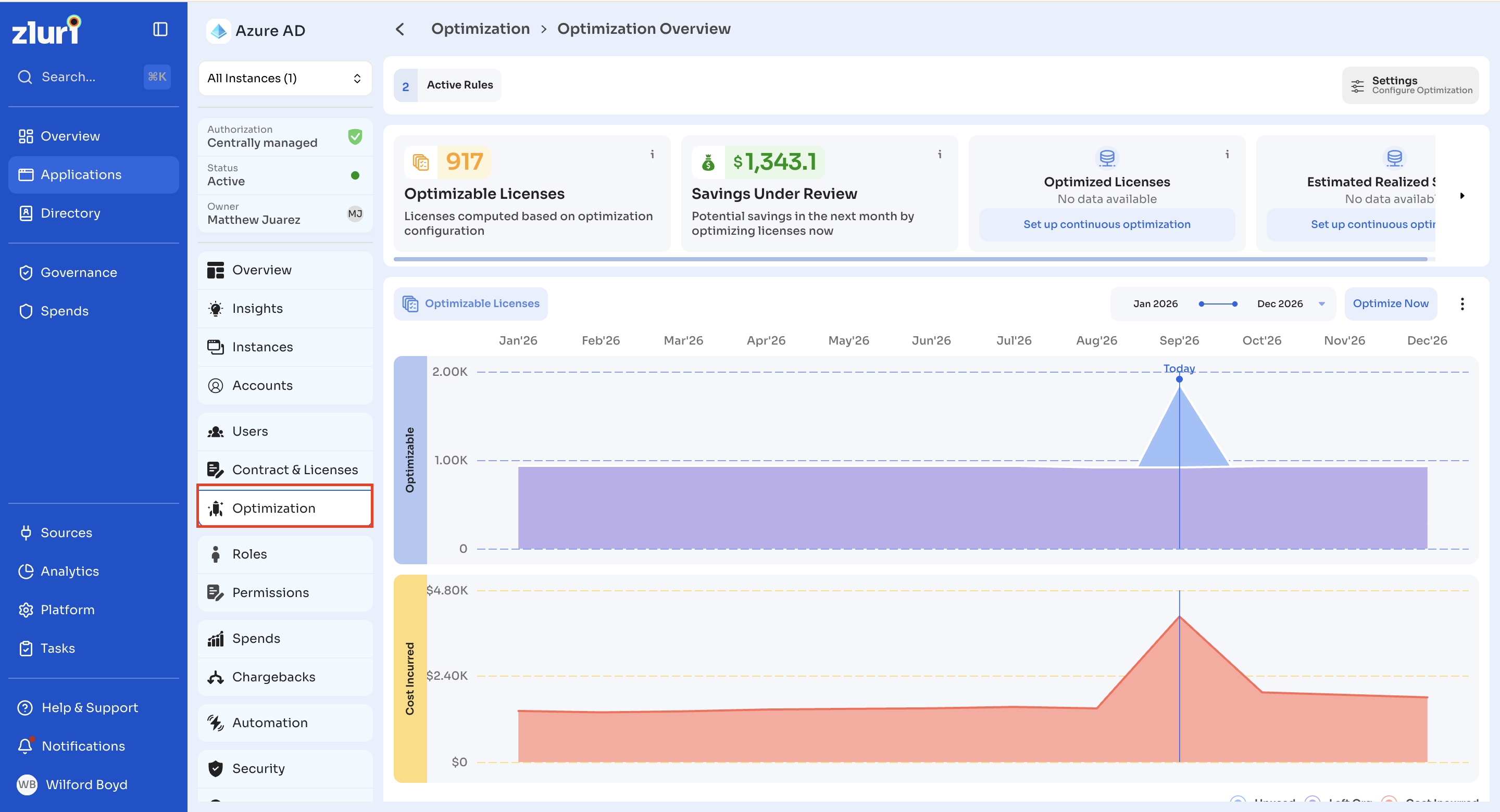
The Optimization Overview page opens. Use the instance dropdown at the top of the application menu to view data for All Instances or a single instance. To learn more, see Instances.
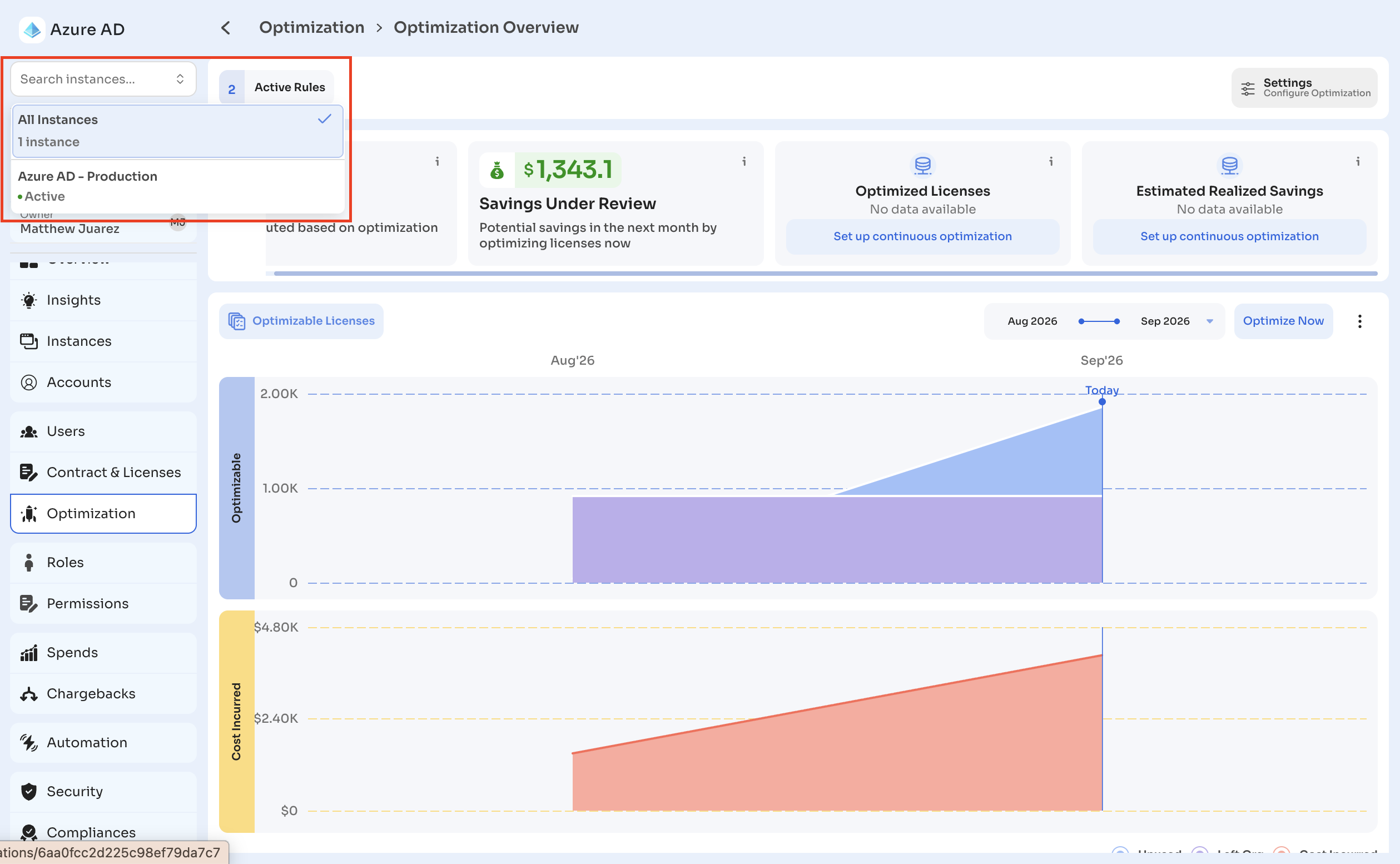
Active rules and settings
The Active Rules count at the top of the page shows the number of optimization rules currently active for the application.
Select Settings to open Optimization Settings for the application. See Configure optimization settings.
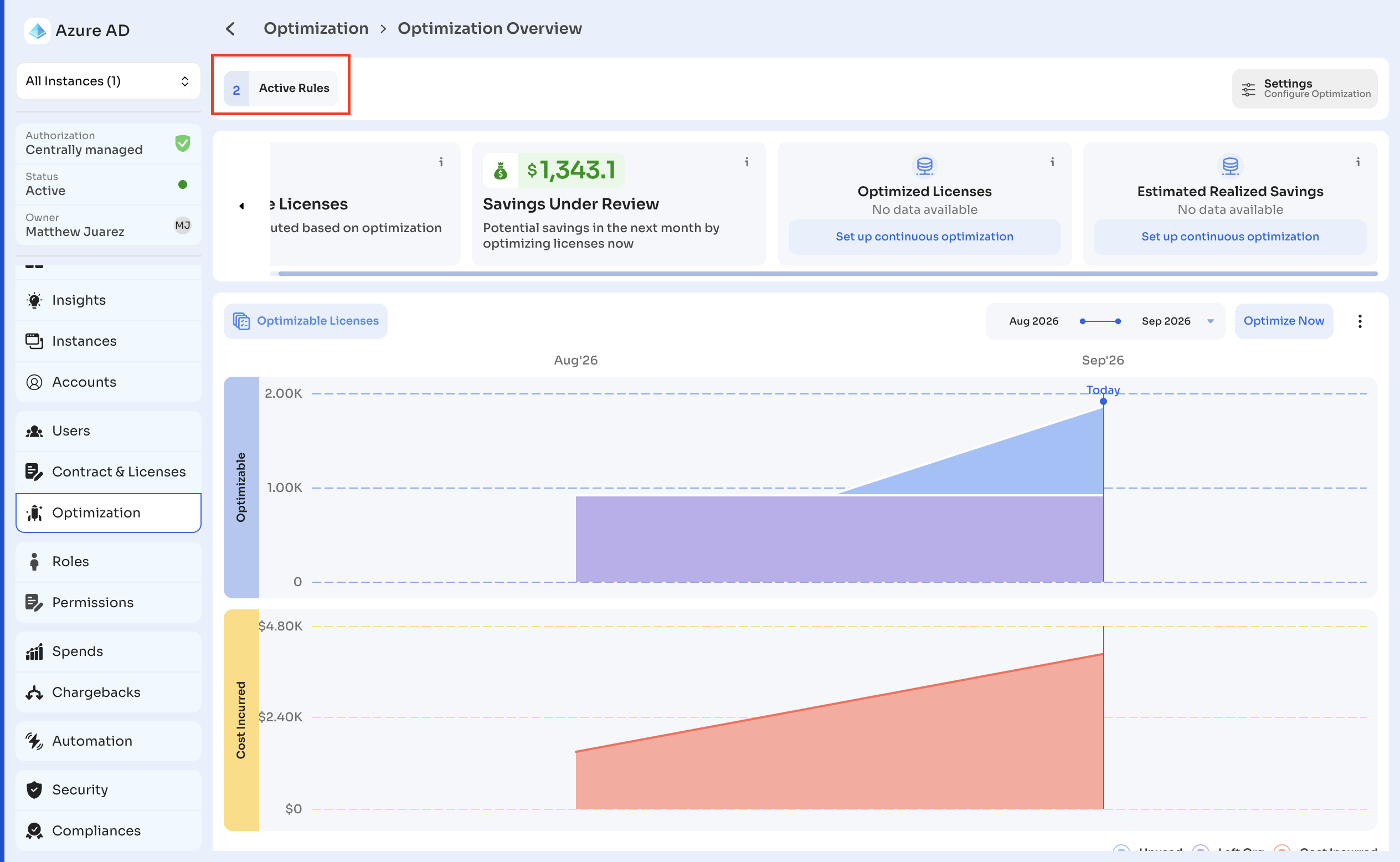
Summary cards
The summary cards show the current optimization status of the application.
| Card | What it shows |
|---|---|
| Optimizable Licenses | The number of licenses identified for optimization, based on the application's optimization configuration. |
| Savings Under Review | The potential savings for the next month if you optimize the optimizable licenses now. |
| Optimized Licenses | The number of licenses optimized through continuous optimization. |
| Estimated Realized Savings | The estimated savings from licenses already optimized through continuous optimization. |
Optimized Licenses and Estimated Realized Savings show data only after continuous optimization is set up. Select Set up continuous optimization on either card to configure it. To learn more, see Continuous Optimization.
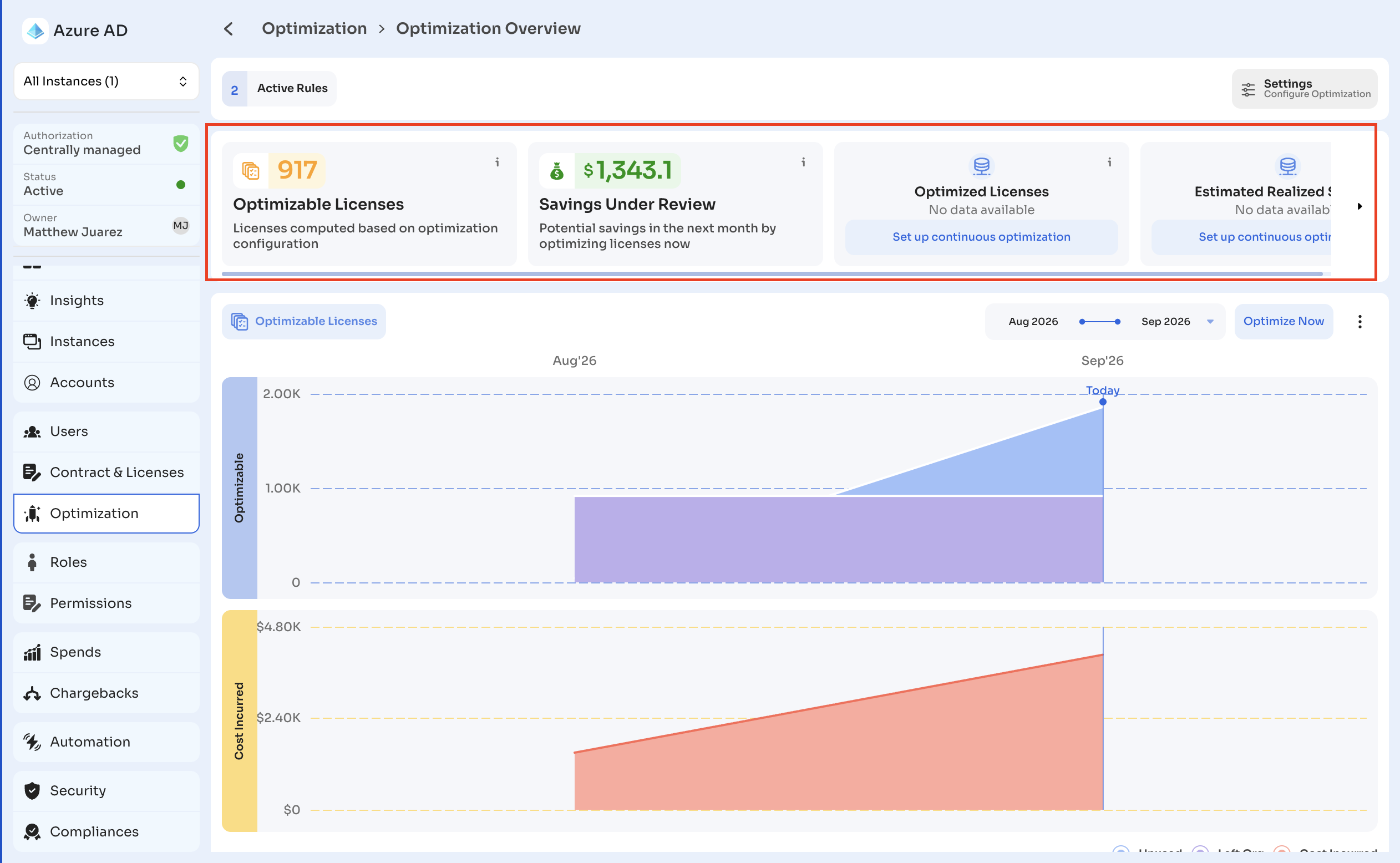
Optimizable Licenses chart
The Optimizable Licenses chart tracks optimizable licenses and cost over a selected date range. A Today marker separates past data from the current month.
The chart has two panels:
-
Optimizable: The number of optimizable licenses each month, split into Unused and Left Org licenses.
-
Cost Incurred: The cost incurred for the application each month.
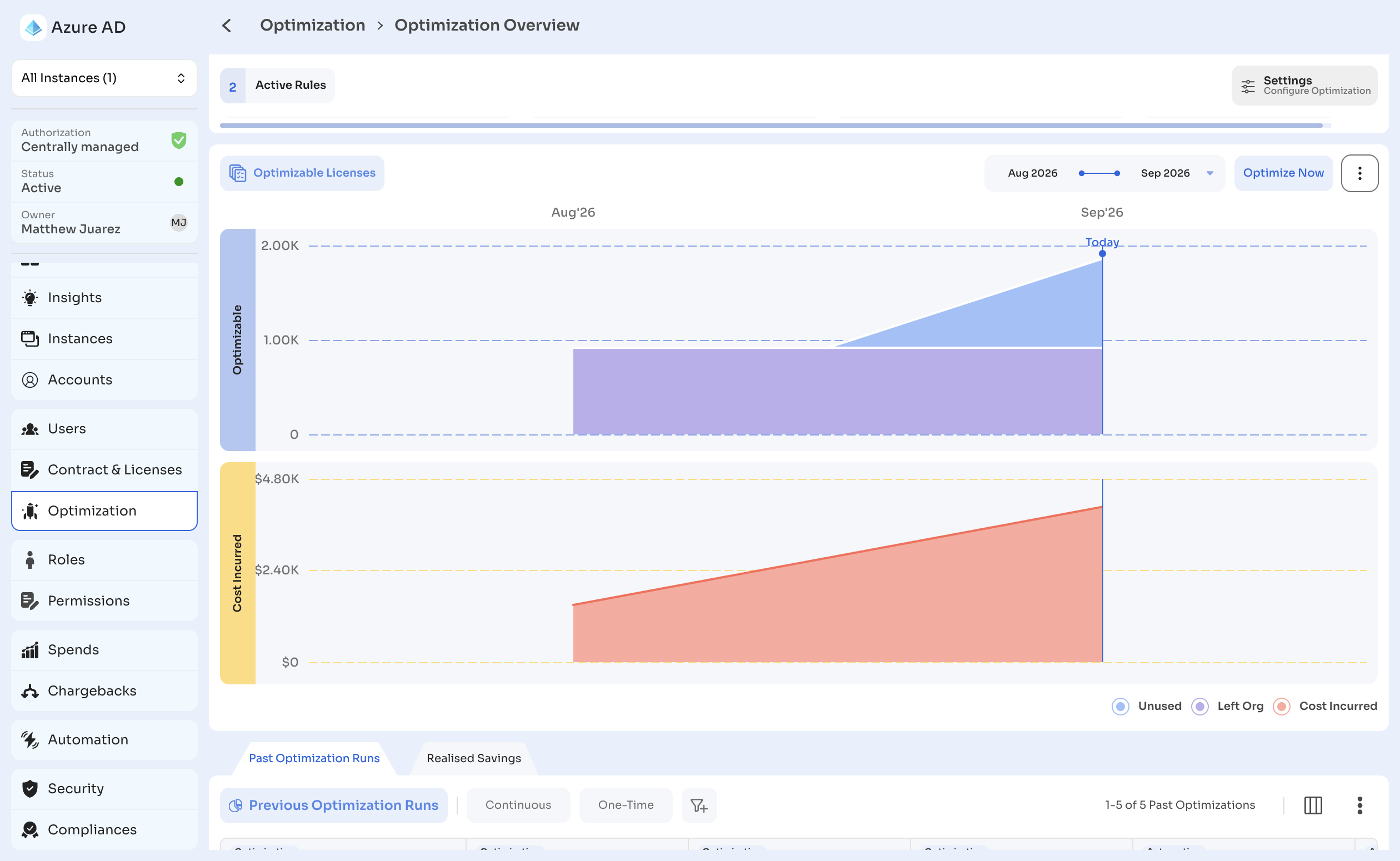
To work with the chart:
- Select the date range dropdown to change the start and end months.
- Select Optimize Now to start a one-time optimization run. To learn more, see Optimization Reports.
- Select the more options menu (⋮) to Refresh the chart, Download PNG, or Download PDF.
Past Optimization Runs
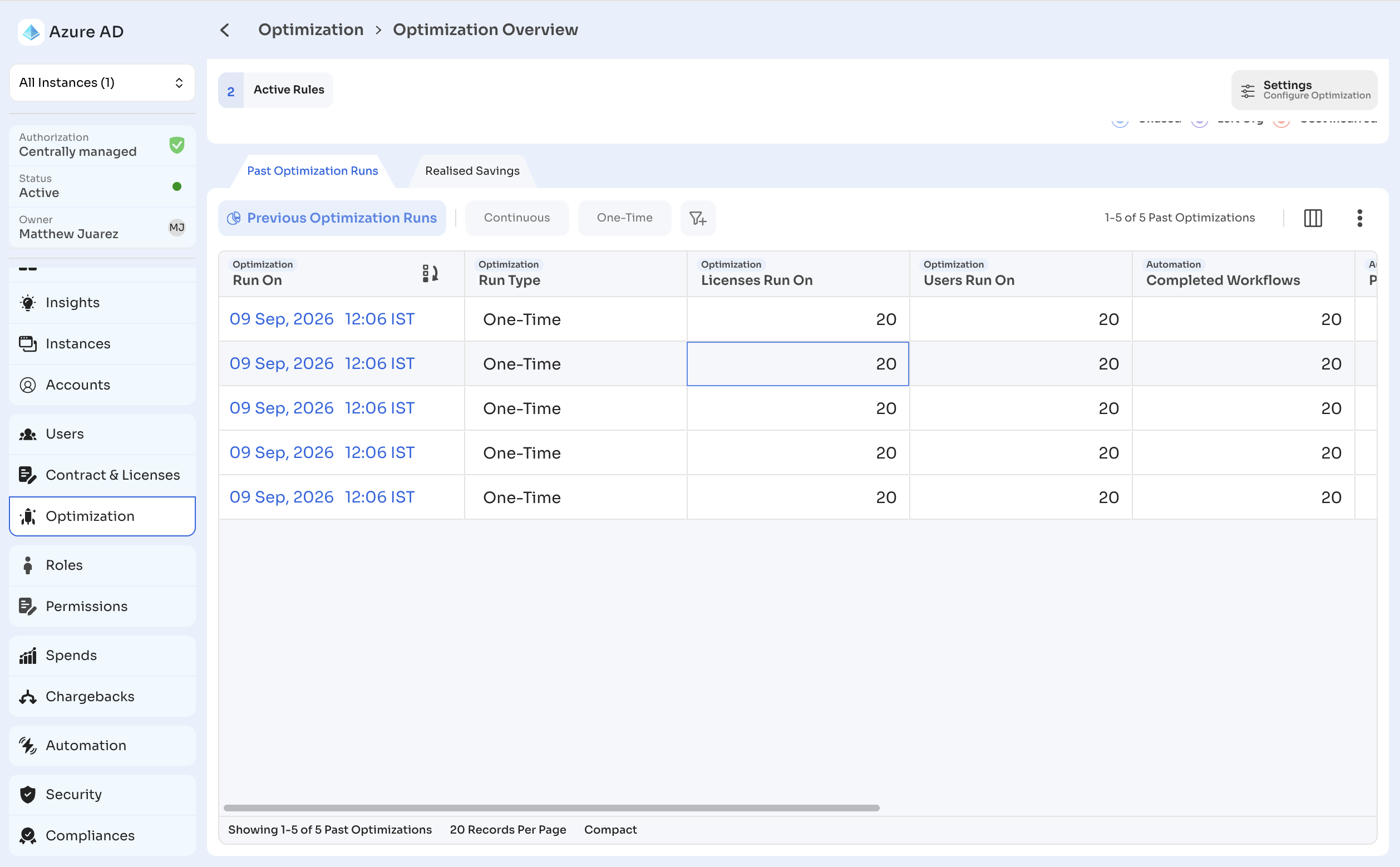
The Past Optimization Runs tab lists every optimization run for the application.
| Column | Description |
|---|---|
| Run On | The date and time of the run. |
| Run Type | Whether the run was Continuous or One-Time. |
| Licenses Run On | The number of licenses included in the run. |
| Users Run On | The number of users included in the run. |
| Completed Workflows | The number of automation workflows completed for the run. |
Select Continuous or One-Time to filter runs by type. Select the filter icon to add more filters. Select the columns icon to show or hide columns.
Realised Savings
The Realised Savings tab lists the savings from licenses revoked through optimization.
| Column | Description |
|---|---|
| License Revocation Date | The date the licenses were revoked. |
| Licenses Revoked | The number of licenses revoked. |
| Estimated Savings | The estimated savings from the revoked licenses. |
| Actions | The actions available for the record. |
Select the more options menu (⋮) to Refresh the table, change the View Density, Export View, or create a Custom Export.
Configure optimization settings
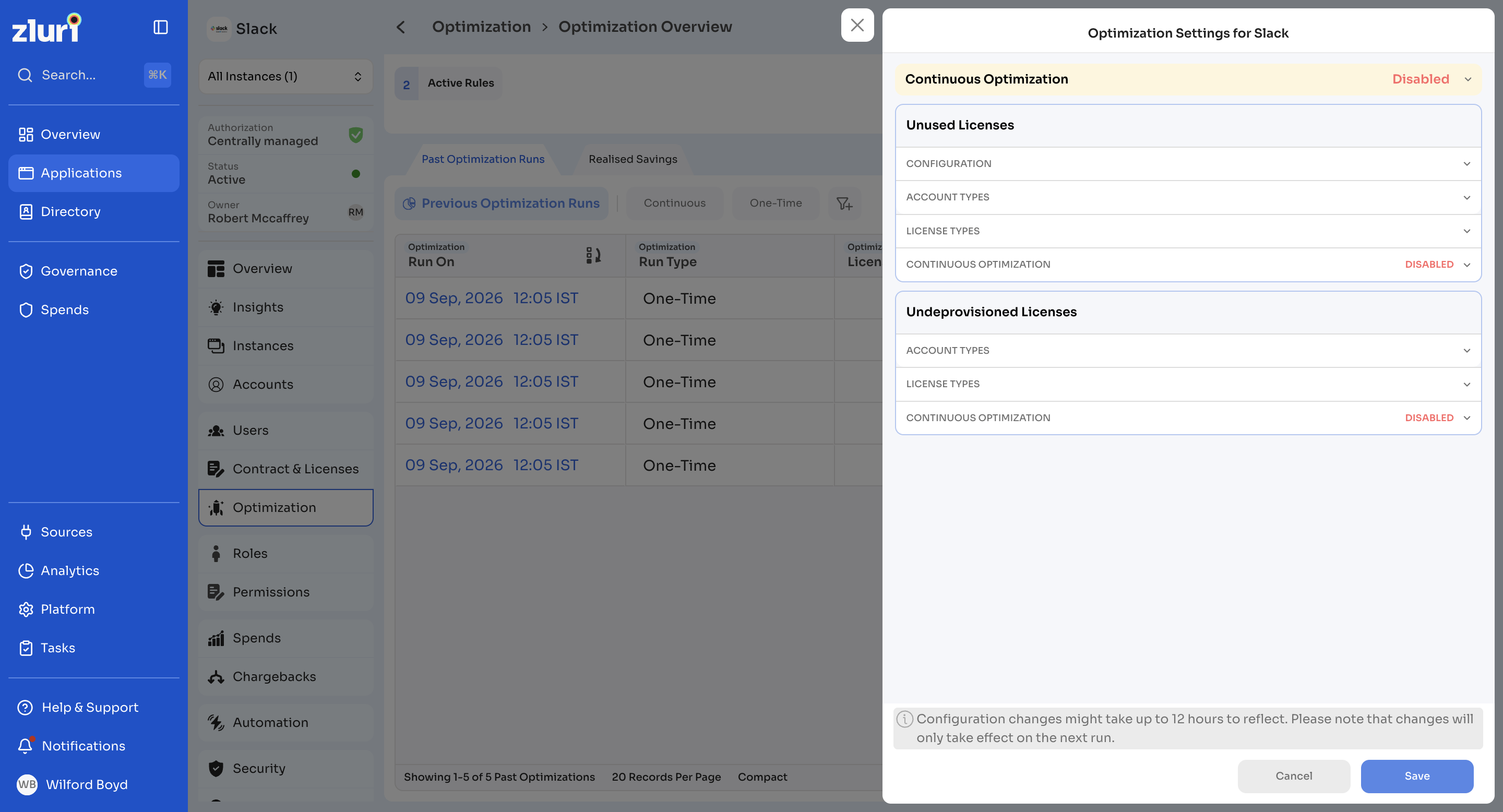
Optimization Settings control which licenses Zluri identifies as optimizable and whether continuous optimization runs for the application. Select Settings on the Optimization Overview page to open them.
Settings are organized into two license categories:
- Unused Licenses: licenses assigned to users who don't use the application
- Undeprovisioned Licenses: licenses still assigned to users who have left the organization
For step-by-step instructions on configuring these settings and setting up continuous optimization, see Continuous Optimization.
To keep specific users out of optimization, see Exclude Users from Optimization.
Updated 14 days ago